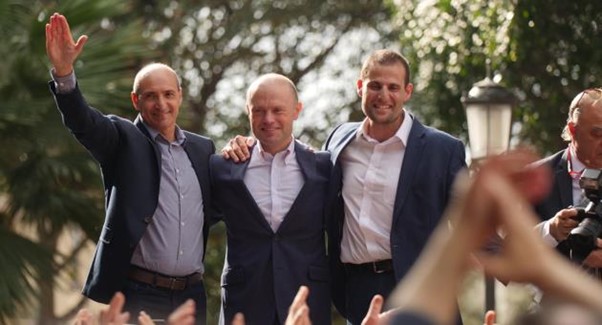
At the time during which I’m writing this article, any speculation about a snap general election being called for November 2021 has been dispelled completely. Prime Minister Robert Abela ruled out any snap elections, thus affirming that it will occur at the end of the 5-year term, in 2022.
Undoubtedly, one can certainly say that the Labour Party would have had several advantages should the election have taken place now instead of next year.
Satisfactory polling results on every national survey, a successful vaccine rollout, the COVID-19 pandemic in Malta currently being under relative control, and a country reeling from a budget that has just been announced. Whether it had been now or 2022, the Labour Party still looks poised to secure another electoral victory. Should this materialise, it would be Labour’s third consecutive victory, with a predicted resounding majority, which is said to bring in a margin of over 50,000 votes.
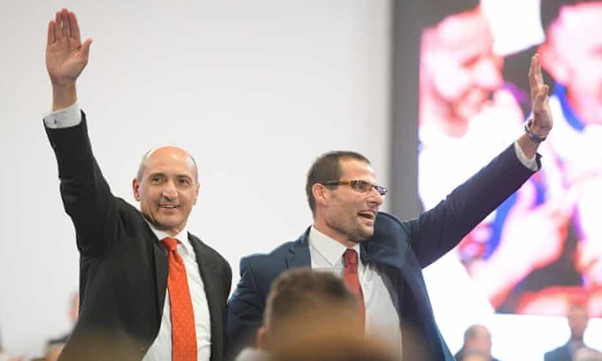
All this paints a very ideal and comfortable picture for the Labour Party, but it isn’t one to be taken lightly.
This is due to various factors which Labour has had stacked against it for almost the entirety of its tenure in government, with such factors determining the course of Abela’s agenda as PM, ever since he assumed the role in January 2020 following a brief leadership race against Deputy PM Chris Fearne.
It can be said that the revelations which had been made leading up to this leadership election were only the culmination of a political and constitutional crisis that had developed following the release of the Panama Papers in 2016.
However, the severity of this crisis was considerably heightened following the assassination of investigative journalist Daphne Caruana Galizia in 2017, with the incident shunning a light onto the pressure felt by journalists whilst they are simply doing their job, and the magnitude of corruption and illicit practices uncovered by Caruana Galizia throughout her career.

Whilst the scandals which were exposed consisted of several individuals, the main actors of this political saga can easily be summarised as having been former Chief of Staff Keith Schembri, former Minister Konrad Mizzi, and former PM Joseph Muscat.
Amidst the socio-economic reform and advancement which was taking place as he was at the helm, Muscat’s government never saw a lack of corruption allegations, controversy and an international spotlight being shun on Malta’s reputation.
Despite the seriousness of what was occurring and being revealed, Labour nevertheless maintained its ironclad majority, with the support which it enjoys only continuing to increase on a nationwide level. Whilst there were those who became aware of the evident contrast which existed between the acts being committed, and Labour’s traditional socialist and progressive ideological edifice, the way in which Malta’s political discourse was being dominated by this saga led to many questioning whether the socially and economically liberal legacy of the ‘movement of progressives and moderates’ created by Muscat could ever be separate from the corruption which was festering in its wake.
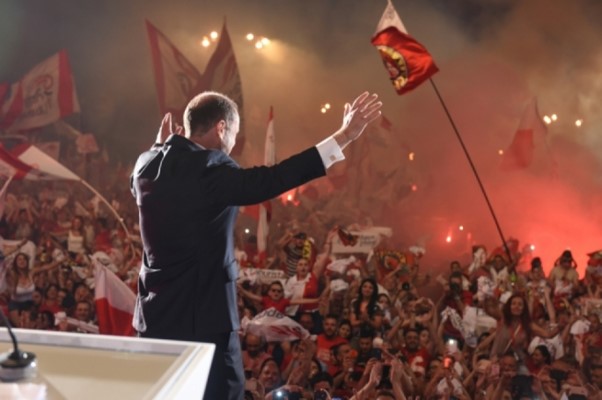
One may argue that the significant achievements ushered in by Muscat were being overshadowed by the actions of a few who didn’t have Labour’s true interests at heart and were only acting to serve their own.
Others argue that it’s impossible to divorce the two aspects, as some consider the movement moulded around Labour and the corruption which we have witnessed over the last 8 years to be one and the same. As to which argument people choose to operate under, that’s certainly not a choice for me to dictate to them.
What’s for sure, is that the next election and beyond should serve as an opportunity for Labour to consolidate the good which it has ushered in over the past 8 years. However, what is yet to come would be a missed opportunity should Labour fail to confront its past, and not reconcile itself with the appearance which it has accumulated over the years as a result of the unethical and improper behaviour displayed by leading figures within its government and the party itself.
To conclude, this situation seems to leave us with more questions than answers, questions which I myself wrack my brains over from time to time. To end with two which are straightforward and blunt:
What’s next for Malta?
That’s up to the electorate to decide by means of its vote.
What’s next for Labour?
That’s up to the party, and no one but itself.
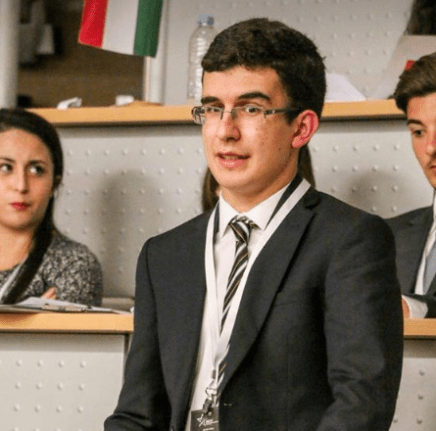
Written by: Jacob Callus
Have an interest, an idea, or an opinion?
Do you have an interest you’d like to tell others about? Or an opinion you’d like to share with the world? From politics to culture and sports, message us if you would like your articles published!
 Bird's Eye View