
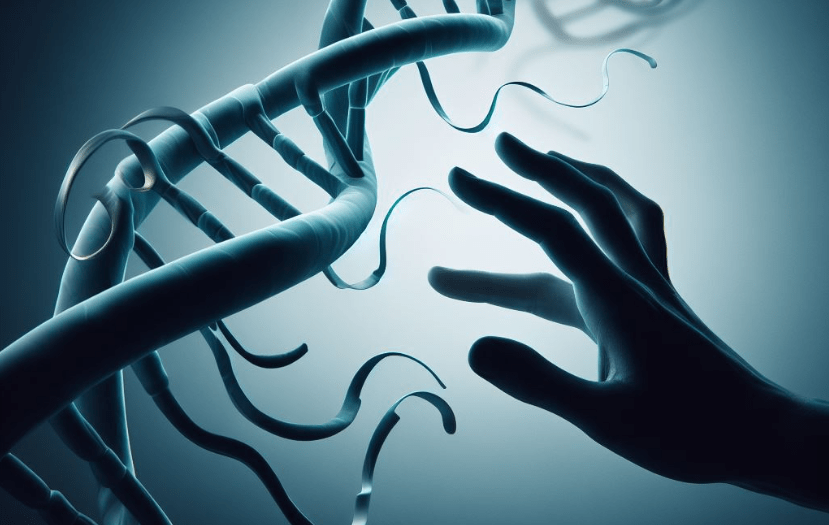
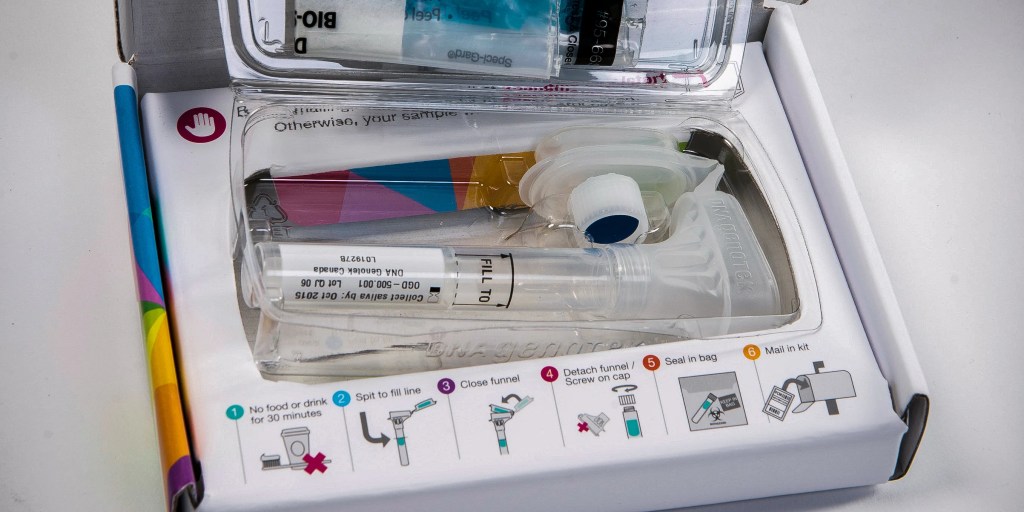
In an age where understanding one’s ancestry is just a swab away, DNA testing has surged in popularity. Companies promise a journey of self-discovery, but at what cost? Put simply, you are signing up for the most dystopic form of data harvesting humanity currently possesses.
The likes of Veritas Genetics, Ancestry, and 23andMe are becoming an increasingly popular service that people use, either for themselves or as a gift, to learn more about themselves and their heritage. What the services don’t tell us, is that in doing so these providers are also learning a lot about us, a lot more than they should.
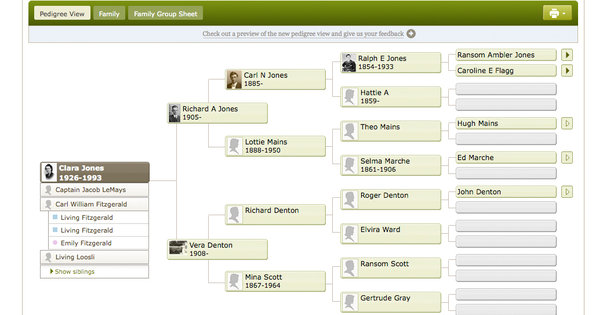
So what happens when YOU pay to surrender your genetic information? Well, the evermore apparent truth is that we don’t really know. Your data may be used for its marketed purpose, that is, to send you information (of which the accuracy is unclear) about your origins. But it can also be used by academic, nonprofit and industry organisations. This might not seem too bad at face value. But then comes a major source of cashflow. Your information can also be licensed to for-profit drug companies to fuel their own research.
Of course, this is heavily promoted as a ‘good for all’ outcome – but there is a rule of thumb that we should never forget – as with any other company, Genetic harvesters are in it for the money, not for the public wellbeing. If the DNA you paid to send them helps develop a drug for a pharmaceutical company, there is nothing governing what they do with any of it. It could be a drug they sell at an extortionate rate of profit, it could be something that creates dependencies, and of course, it could be something that produces no result.
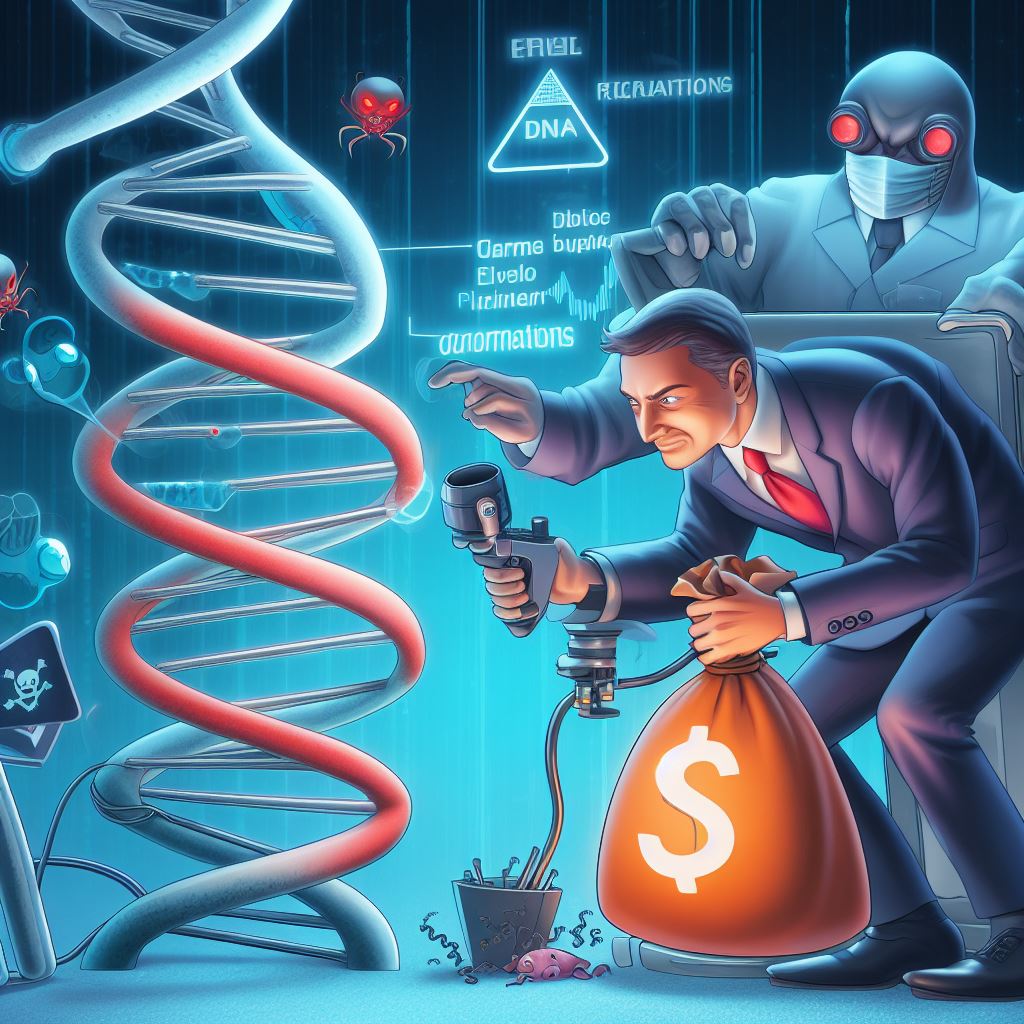
In any case, your DNA has now made money for the stakeholder when you paid to send it, when it was licensed to pharmaceutical companies, when it was sold off for market research purposes, and when it was…
Hacked.
Because of course it was. And if it hasn’t yet, it will be.
In 2018, over 92 million account details from genealogy and DNA testing service MyHeritage were found after a security researcher discovered ‘a file named myheritage containing email addresses and hashed passwords’ on a private server outside of the site’s structures.
On July 19, 2020, GEDmatch, a genealogy tool that allows users to upload their DNA profiles, had one of its databases hacked, allowing police to search the profiles of more than 1 million users that would have otherwise been inaccessible to law enforcement.
In May of 2021, ‘world leader in private DNA testing’ DNA Diagnostic Centre (DDC)’s service provider notified the firm of unusual activity on its network. Instead of taking action, DDC sat back as more warnings came through. This kept going until evidence of a ‘Cobalt Strike’ was found on its network. ‘Cobalt Strike’ is a popular penetration testing tool that has frequently been co-opted by criminals to further penetrate already compromised networks’
By the time DDC woke up to the ringing bells, genetic data connected to 2,100,000 individuals and their trees as well as tens of thousands of social security numbers had been stolen.
And
Just last month, an anonymous seller posted that they had a “one million Ashkenazi database” on a forum for selling hacked data, referring to people of central and eastern European Jewish heritage. This stemmed for a breach connected to genetics test kit company 23andMe, which uses a sample of your saliva to produce ancestry and health reports. The company confirmed that customer data was for sale on a hacker forum.
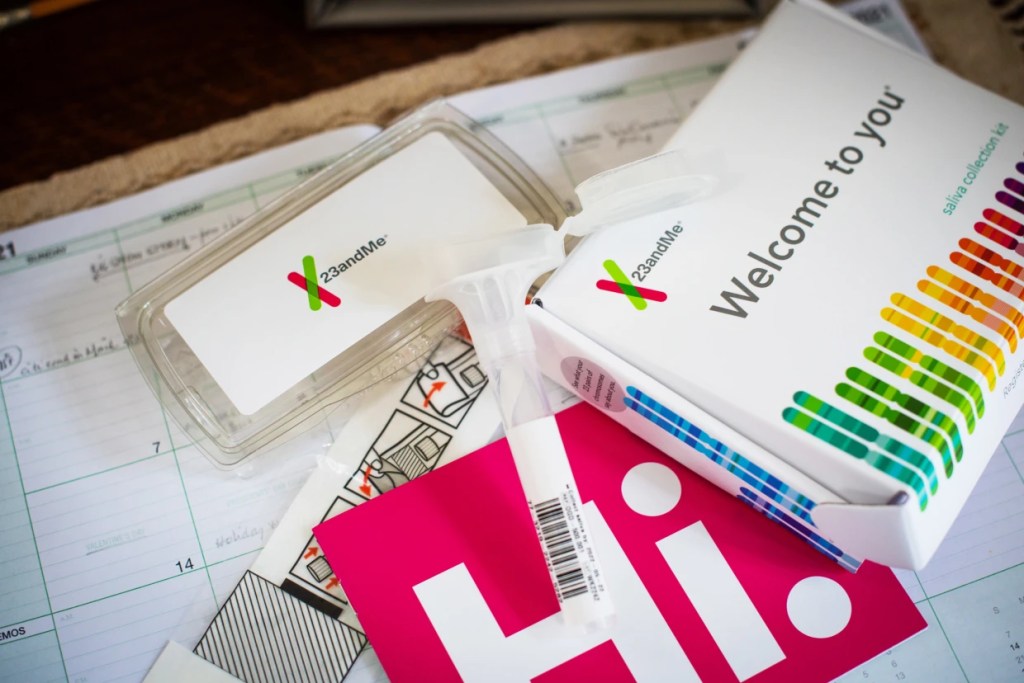
Attackers had logged into individual customers’ accounts on 23andMe by re-using credentials found in databases for hacked accounts of other services on the internet. Profiles of additional people were also created by copying the names of the 23andMe customers’ relatives who had been connected using the company’s “DNA Relatives” tool. 23andMe’s DNA Relatives feature let users connect with potential relatives who share similar DNA and exchange their genetic profiles.
Even an idealistic situation is a loss on your part.
Let’s say everything is perfect. Your data is safe, respected, never sold, never hacked. Does it really matter? If your DNA is genuinely earmarked for use in researching humanity’s collective ancestors or to look for rare disease genomes, and is destroyed right after, isn’t it a win win?.
Save the deliberations. It is not.
For one thing, the actual sample’s fate makes little difference now. Your information is digitized and can be shared countless times and in countless ways. Your information has been run through an ‘SNP test’ involving hundreds of thousands of markers. Of these markers, the research will be looking for a tiny difference called a ‘single nucleotide polymorphism’(SNP), a sign in your genetic code that may shed light on rare disease in your family tree leading back to your great ancestors.
And now an international corporation and its partners know everything about it and are more than willing to sell the scoop to the highest bidder. And you will never know, because you only paid for fun facts about your origins.
That analysis has now shown things about your health that the company will never tell you. And yet it is information that will be used, maybe by other companies, maybe by governments, possibly even by your employer. And speaking of family tree’s, by your relative’s employer as well.
DNA is not your data to give up.
We’ve all learnt to live with the adage of the internet overlords knowing our every move. We’re all desensitised to seeing ads about our precise day-to-day interest as complex algorithms pick up on our every move. We’ve come to terms with surrendering our thoughts in exchange for free entertainment.
But your digital footprint is wholly yours. It contains information about your behaviour, and harvesting is designed to target you.
DNA is far more powerful. It provides information about not just you, but every single individual in your bloodline. And this is no secret. Providers have even gamified the practice so you can be impressed and even offer up more help for them to connect every individual in the globe to each other via the complex bloodlines that underlay our societies.
Many of these companies have clauses allowing them to share data with third parties. You may be clicking accept on terms you couldn’t fathom to be included in the agreement.
Think laws can keep you safe from discrimination? Think again
Of course we can and do have laws prohibiting discrimination based on genetic information, amongst other factors. But you would have to prove that you’ve been discriminated based on your genetic information, and how exactly do you plan on doing that? Unlike the holder of our information, we know absolutely nothing about our genetic code, or at least nothing that would be in use against us. And if we don’t even know there is information about you that can be used against us, how can we prove it is?
At the moment, we can’t. What we can do, is refuse to give them more. These companies can already identify a vast portion of us by connecting the dots from the databases they have; a large portion of Americans with European ancestry can already be identified using DNA databases, for example. Not only could authorities use this information, but so could other people seeking personal information about someone, as you may have already imagined with the 23andMe transaction involving individuals with Jewish heritage.

But the technology and their stores are not yet advanced enough to be able to pinpoint each of us based on easy parameters, and it is extremely unlikely that any of you or your relatives’ genetic information is being used against you. Currently, laws offer some protections, but there are gaps, especially regarding how genetic data can be used by third parties.
Nevertheless, we’re sliding at an uncomfortable pace, and why trust legislators to protect our information, when we can simply refuse to provide it?
So word of advice.
Don’t do it. And if you or someone you know has done it, delete your profiles with these services to the best of your ability and make sure to discourage others from doing so.
DNA testing offers a fascinating glimpse into our past, but it comes with a cost to privacy that extends beyond the individual. As technology advances, so should our awareness and regulation of how our genetic data is used and protected. Consider using historical records, family trees, and oral histories as less invasive methods of exploring your ancestry. But stop there.
Your DNA is the most valuable thing you own, it literally is you. A minor satisfaction of curiosity is not worth surrendering what’s left of your ownership of ‘you’.

Written by: Gianluca Vella
Have an interest, an idea, or an opinion?
Do you have an interest you’d like to tell others about? Or an opinion you’d like to share with the world? From politics to culture and sports, message us if you would like your articles published!
 Bird's Eye View